


Charging an Electric Mercedes-Benz in Richmond: Home Wiring, Cost Per Mile and Chargers on I-95
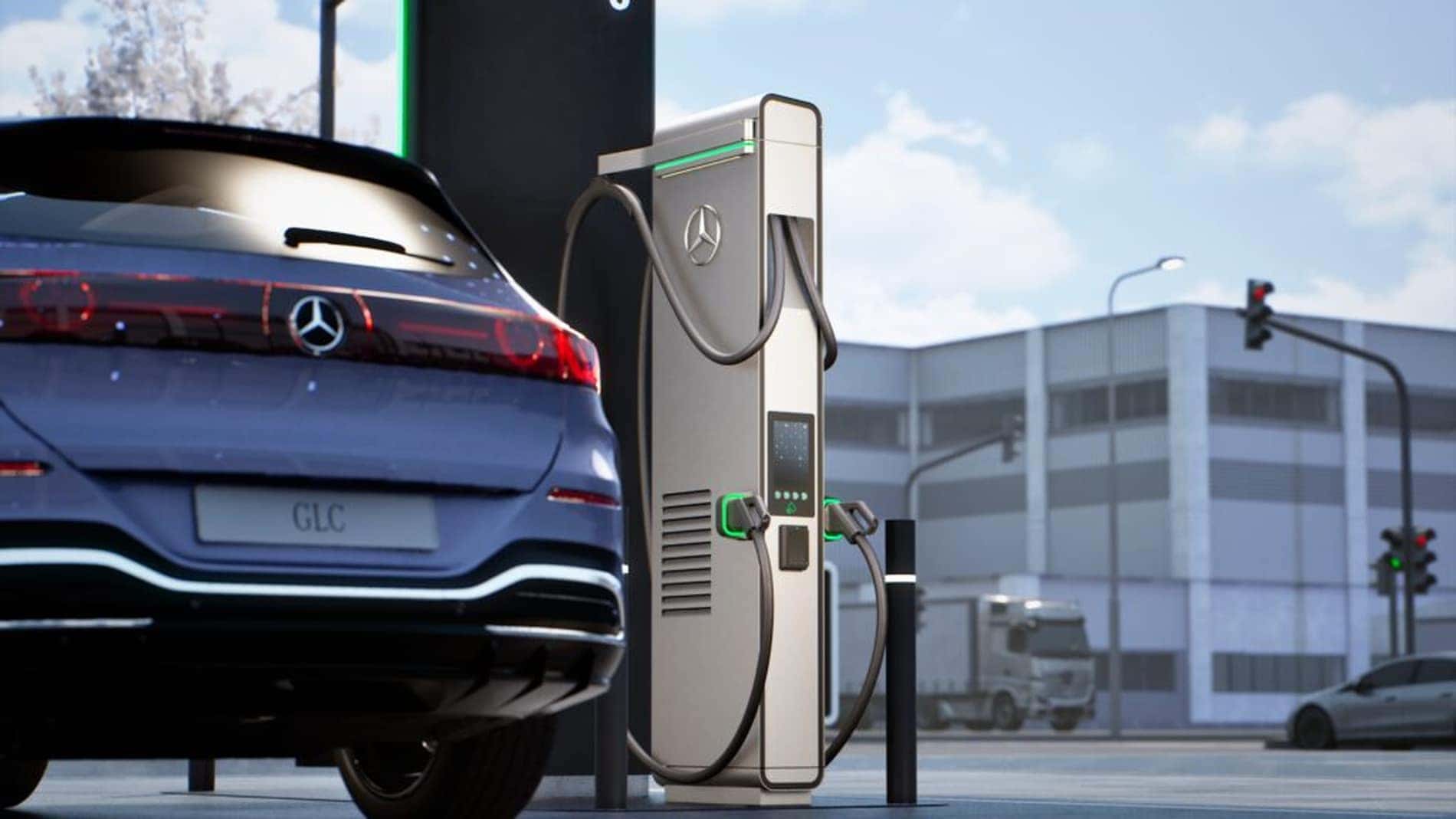
Charging an Electric Mercedes-Benz in Richmond: Home Wiring, Cost Per Mile and Chargers on I-95
Charging an electric Mercedes-Benz in Richmond starts at home: Mercedes-Benz USA calls plugging in at home the most convenient and cost-effective way to charge. This guide covers the wiring, a simple cost-per-mile formula, and how to plan fast charging on I-95.
- Start with home charging. Mercedes-Benz USA calls plugging in at home the most convenient and cost-effective way to charge. A 240-volt Level 2 circuit is the faster home option.
- A licensed electrician sizes the circuit. The U.S. Department of Energy says the National Electrical Code treats EV charging as a continuous load. In the City of Richmond, electrical work uses a separate trade permit.
- Cost per mile is simple math. Multiply your model’s EPA kWh per 100 miles by your rate per kWh, then divide by 100. Your rate plan and where you charge both change the result.
- I-95 trips need a quick plan. The Mercedes-Benz app lists public networks, and Mercedes-Benz drivers can use Tesla Superchargers with the right adapter and settings.
How do you charge an electric Mercedes-Benz in Richmond?
Charging an electric Mercedes-Benz in Richmond usually means plugging in overnight at home, with public DC fast charging for longer trips. There are three charging levels. Mercedes-Benz USA says Level 1 uses a standard 120-volt household outlet and delivers only up to 1.9 kW. It recommends Level 1 only when faster options are not available. Level 2 runs on 240 volts, which the U.S. Department of Energy calls typical in residential applications. DC fast charging is the public, high-power option.
| Level | Power source | Mercedes-Benz USA figure | U.S. DOE figure |
|---|---|---|---|
| Level 1 | 120-volt household outlet | Up to 1.9 kW, about 2 to 4 miles of range per hour | About 5 miles of range per hour |
| Level 2 | 240-volt circuit (typical at home) | Up to 30 miles of range per hour | 2.9 to 19.2 kW, about 25 miles of range per hour |
| DC fast (Level 3) | Public high-power station | 10% to 80% in 30 minutes or less | Power outputs up to 500 kW |
Sources: Mercedes-Benz USA “Charge” page and U.S. Department of Energy Alternative Fuels Data Center, reviewed 11/10/2026. General figures; actual rates depend on the vehicle, the equipment and conditions.
Mercedes-Benz USA says, “Your EV comes with a flexible charging cable for Level 1 or 2 (240V) charging.” It also notes you can plug in overnight, typically with special rates from your local utility. See the full overview on the Mercedes-Benz USA charging page.
Which electric Mercedes-Benz models are sold now, and how do they charge?
Mercedes-Benz USA lists CLA, GLC and G 580 Electric models plus EQB, EQE and EQS. The charge port decides how you fast charge. That is the list as of 11/10/2026. Mercedes-Benz now groups these as “Mercedes-Benz Electric.” Newer models carry an Electric badge, while EQB, EQE and EQS models keep “EQ” in the name. If you searched for Mercedes-EQ charging, this guide covers those models. The full list also includes the EQE Sedan, EQE SUV, EQS Sedan, EQS SUV and Mercedes-Maybach EQS 680 SUV.
| Model | Battery | Peak DC fast charging | DC charge port |
|---|---|---|---|
| 2027 CLA 250+ / CLA 350 4MATIC® Electric | Not listed on the model page | Up to 320 kW | NACS inlet, with an adapter for CCS1 chargers |
| 2027 GLC 400 4MATIC® Electric | 94 kWh | Up to 330 kW | Check the vehicle documents |
| 2027 EQS Sedan | 122 kWh | Up to 350 kW | NACS for DC fast charging, J1772 for AC charging |
| EQE SUV | 96.0 kWh (320+) or 90.5 kWh (320 4MATIC®) | Not listed | CCS1 (NACS needs an adapter) |
| EQB, EQE Sedan, EQS SUV, G 580 Electric | Varies by model | Not listed | CCS1 (NACS needs an adapter) |
Sources: Mercedes-Benz USA model pages, “Charging with NACS” page and the 10/22/2026 model-line release, reviewed 11/10/2026. Peak rates are maximums; actual rates vary with vehicle equipment and charging conditions.
Range figures help with planning too. Mercedes-Benz USA lists EPA-estimated range of up to 467 miles for the 2027 EQS 450+ Sedan. It lists 374 miles for the 2027 CLA 250+ Electric and up to 350 miles for the 2027 GLC 400 4MATIC® Electric. Browse current models on our electric Mercedes-Benz page or see the EQE SUV.
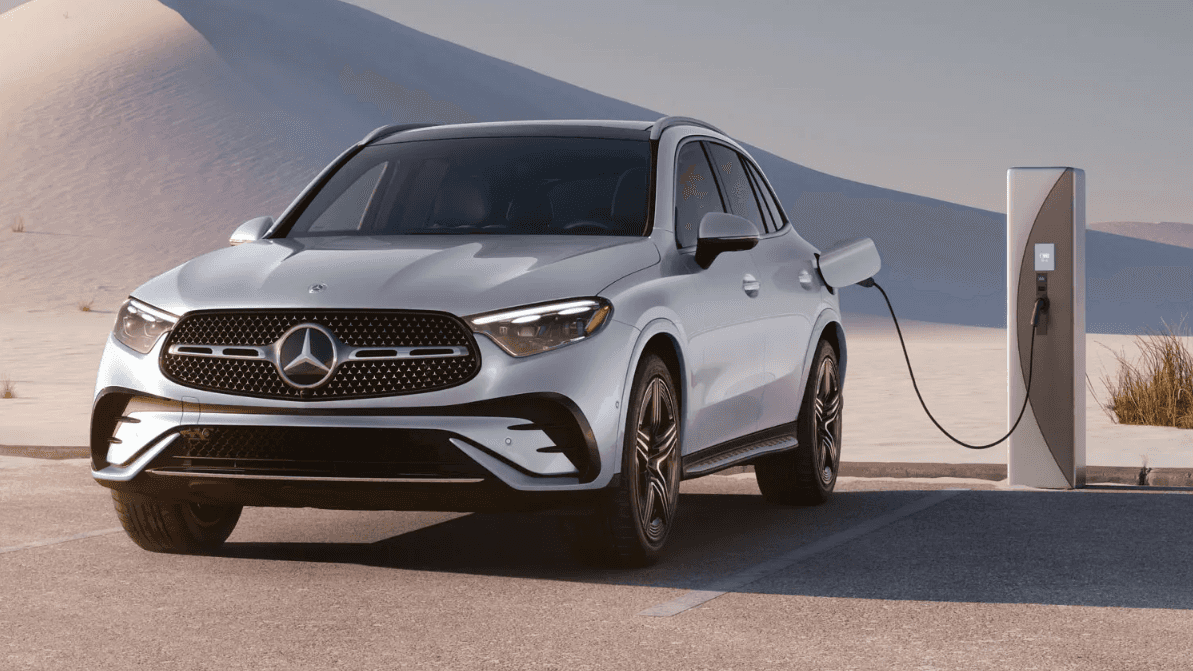
What home wiring does a Level 2 charger need?
A dedicated 240-volt circuit, sized by a qualified electrician to code, plus safety-certified charging equipment. The U.S. Department of Energy says EV charging is a continuous load under the National Electrical Code. That is why the circuit, breaker and wire size are a job for a professional. DOE notes that a qualified electrician can add circuits for Level 2 charging. It also says appropriate permits may be required.
The Mercedes-Benz Wallbox and the Power Charger
Mercedes-Benz USA lists its Wallbox at up to 11.5 kW, adding up to 30 miles of range per hour, with a 23-foot cable. It says to speak with your dealer to buy one. Your vehicle’s onboard charger can limit the actual rate. Mercedes-Benz USA also lists a Power Charger that “includes two interchangeable plugs.” One fits a standard 120V household outlet, the other a dedicated 240V outlet. Ask our parts department about either one.
- Check your panel and parking spot. Note where you park and how far the charger cable must reach. The Wallbox cable is 23 feet long.
- Hire a licensed electrician. Ask them to confirm panel capacity and size the dedicated circuit for continuous charging, as the code requires.
- Ask about the permit. In the City of Richmond, electrical work uses a separate trade permit filed through the city’s Online Permit Portal.
- Choose safety-certified equipment. DOE recommends safety-certified charging equipment. The model year 2026 Mercedes-Benz EQ warranty booklet says only the approved or recommended charging cable for the vehicle may be used.
- Set up charging times. Schedule charging for your utility’s off-peak hours if your rate plan has them, and precondition the cabin while still plugged in.
One tax note has changed. The IRS says the federal home-charger credit covers property placed in service at your main home through June 30, 2026, in eligible census tracts. The credit ended for equipment placed in service after June 30, 2026. Ask a tax professional about your own situation.
Questions about charging equipment or your electric Mercedes-Benz?
How do you work out the cost per mile of an electric Mercedes-Benz?
Cost per mile equals your model’s EPA kWh per 100 miles times your rate per kWh, divided by 100. The math is the same for any EV. Find the kWh per 100 miles figure for your exact model on the EPA label or at fueleconomy.gov. Then take the rate per kWh from your electric bill or your utility’s rate schedule. Multiply the two and divide by 100. Run it twice, once for your home rate and once for the public stations you use.
| Cost driver | What to check |
|---|---|
| Vehicle efficiency | The EPA kWh per 100 miles for your model and wheel size |
| Home rate plan | A basic residential rate, or a time-of-use plan with cheaper overnight hours |
| Where you charge | Home versus public DC fast charging, which networks price differently |
| Weather and climate control | Extreme heat or cold adds climate-control demand and changes charging speed |
| Fixed ownership costs | The Virginia EV highway use fee, or the Mileage Choice program |
| Equipment and installation | Charger, electrician, permit, and any panel work |
Cost drivers compiled from Mercedes-Benz USA, Dominion Energy Virginia, Virginia DMV and U.S. DOE pages, reviewed 11/10/2026. This page states no rates or prices; check your own utility bill and current network pricing.
Public charging changes the math. Mercedes-Benz USA lists two years of complimentary charging at Mercedes-Benz High-Power Charging locations for eligible model year 2024 to 2027 electric and plug-in hybrid models. Check the current Mercedes-Benz terms for your vehicle.
What should Richmond drivers know about rates, permits and Virginia fees?
Check your utility’s time-of-use options, ask the city about the electrical permit, and budget for Virginia’s annual EV highway use fee. If your utility is Dominion Energy Virginia, it lists an Off-Peak Plan, Schedule 1G. Dominion calls it a voluntary time-of-use offering for residential customers. It requires a smart meter and no enrollment in demand-response programs such as EV Charging Rewards. Dominion lists a super off-peak window overnight and notes, “Setting your EV to charge during these hours results in less carbon dioxide in our environment.” Read the current hours on the Dominion Off-Peak Plan page.
Virginia DMV states: “An annual highway use fee will be assessed on each electric motor vehicle registered for highway use in Virginia.” It adds: “The fee is included with registration fees and must be paid at the time of original registration and each year at renewal.” DMV updates the fee each July 1 and offers a Mileage Choice program to pay as you drive. Source: Virginia DMV, reviewed 11/10/2026.
For permits, the City of Richmond handles electrical work through a separate trade permit and publishes a Homeowner’s Permit Guide. Start at the city’s permits and inspections page. Dominion closed its older EV-only rate schedules to new customers on November 30, 2018. Mercedes-Benz of Richmond is at 8225 West Broad Street; see our Mercedes-Benz dealer in Richmond page.
Where can you fast charge an electric Mercedes-Benz on I-95?
Use the Mercedes-Benz app or the DOE Station Locator to find DC fast stations along your route, and check the connector type first. The U.S. Department of Energy’s Alternative Fuels Data Center counts public charging statewide. These are its latest Virginia figures.
Mercedes-Benz USA says MB.CHARGE Public in the Mercedes-Benz app gives access to all major public charging networks, with over 170,000 stations across the country. Its own High-Power Charging network is open to all EV drivers, with speeds of up to 400 kW. Mercedes-Benz drivers also get automated charger reservations there. Mercedes-Benz and IONNA are building out the network together, and IONNA sites appear in MB.CHARGE Public.
Before a trip, search the DOE Station Locator or the app for DC fast stations along your route. AFDC updates networked stations daily from the networks, so confirm the connector and status the morning you leave. Plan stops in the 10% to 80% range, where Mercedes-Benz USA says high-speed charging is often fastest.
Can an electric Mercedes-Benz use Tesla Superchargers?
Yes. Mercedes-Benz announced Supercharger access for its battery-electric drivers from February 2025. CCS1 models need the approved adapter, an app activation and one vehicle setting. Mercedes-Benz USA says vehicles with a CCS1 inlet, including the EQB, EQE, EQS and G 580, need a NACS to CCS1 adapter. The 2027 EQS Sedan and the CLA Electric have a NACS inlet for DC fast charging instead. Mercedes-Benz notes some model years include an adapter, so check what came with your vehicle. Others can buy the approved adapter through a Mercedes-Benz dealer.
- Activate MB.CHARGE Public. In the Mercedes-Benz app, go to Manage Digital Extras, then Charging, then MB.CHARGE Public.
- Turn on the adapter setting. CCS1 vehicles also need the “NACS Adapter” setting on, under Charging Status and Settings.
- Inspect before you plug in. Mercedes-Benz says to always inspect both the adapter and the charger for damage or debris before connecting.
- Use DC only. Mercedes-Benz says: “Do not use the adapter for AC charging (ex. home wallbox or Level 2 public charger).”
Mercedes-Benz also points out that Tesla policy prohibits third-party adapters not sold or distributed by an automaker. Use the approved Mercedes-Benz adapter. Ask our parts department about it, or browse Genuine Mercedes-Benz parts.
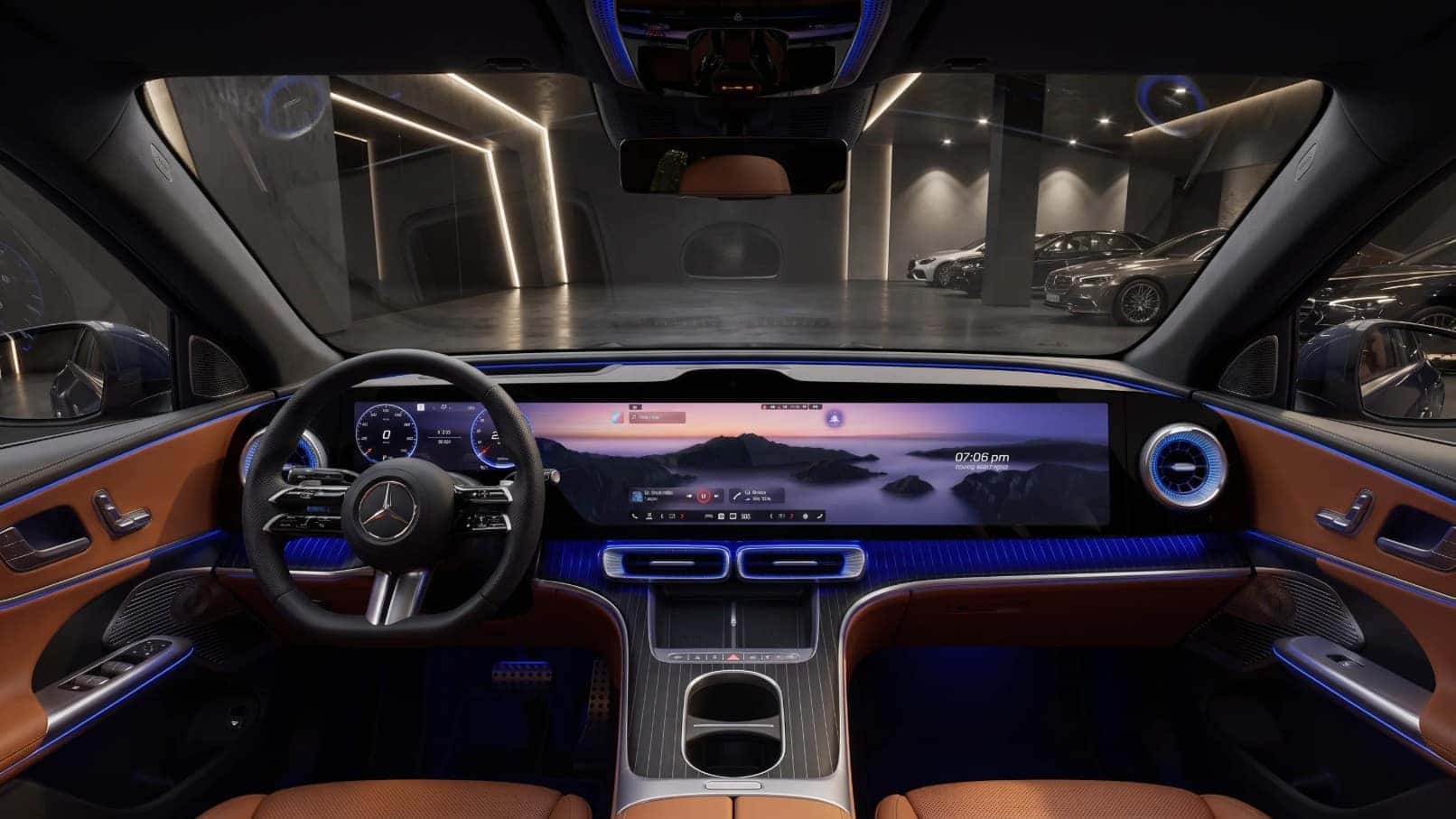
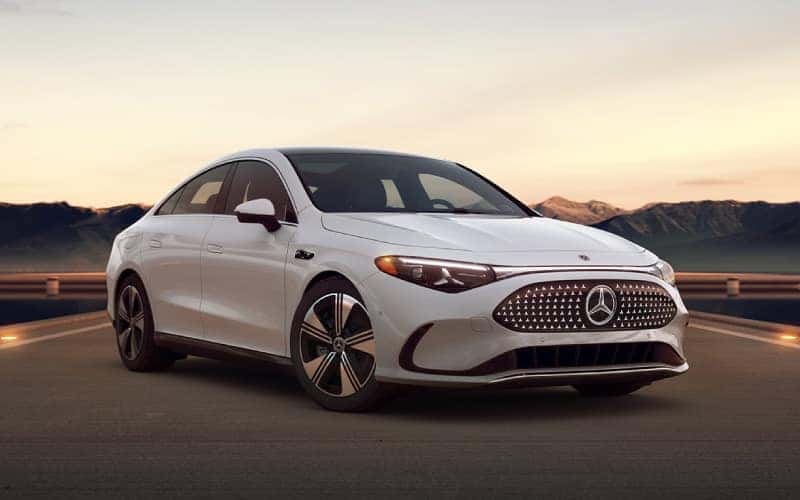
Ready to drive one first? You can schedule a test drive in an electric model or apply for financing online.
How do Richmond summers and winter freezes affect charging?
Temperature affects range and charging speed. Mercedes-Benz USA says to precondition the vehicle while plugged in to extend range in extreme temperatures. Central Virginia brings hot, humid summers and winter freezes. Mercedes-Benz USA says ambient temperature affects battery range. It adds that extreme temperatures place increased demand on the cabin climate control system. Preconditioning while plugged in is its recommended way to extend range in those conditions.
Charging speed changes with conditions too. Mercedes-Benz USA lists battery state of charge, battery temperature and ambient temperature among the factors. It says EVs generally charge fastest at a low state of charge in moderately warm conditions. Above 80%, DC charging speeds gradually slow to help protect the battery.
Which charging habits protect your Mercedes-Benz battery warranty?
Follow the Operator’s Manual charging procedures, use compatible equipment, and do not leave it parked for more than 14 days at 0% charge. The model year 2026 Mercedes-Benz EQ Warranty and Service Booklet lists charging-related exclusions. It excludes damage from “Neglecting to follow correct charging procedures as recommended in the Operator’s Manual” and from “Using incompatible charging devices.” It also excludes “Leaving the vehicle parked for more than 14 days with a 0% battery charge displayed.” Damage from these causes may not be covered.
The same booklet lists the high-voltage battery warranty at 8 years or 100,000 miles, whichever occurs first, for EQB, CLA and G 580 models. EQE and EQS models, sedan and SUV, get 10 years or 155,000 miles, whichever occurs first. Your own warranty booklet governs. To check on your vehicle, schedule service or look up open recalls.
Regular service still matters on an EV. See our Mercedes-Benz service center, current service offers, the tire center and why Mercedes-Benz service matters.
Electric Mercedes-Benz charging questions, answered
Short answers to common questions about charging at home and on the road in Richmond.
Questions about your electric Mercedes-Benz? Call our service team at 804-607-7517.
Can I charge an electric Mercedes-Benz from a regular 120-volt outlet?
Yes, but slowly. Mercedes-Benz USA says Level 1 charging from a standard 120-volt outlet delivers only up to 1.9 kW. That is roughly 2 to 4 miles of range per hour. It recommends Level 1 only when faster options are not available. Mercedes-Benz USA lists Level 2 at up to 30 miles of range per hour.
Do I need a permit to install a home charger in the City of Richmond?
Electrical work in the City of Richmond uses a separate trade permit, so ask before you start. Residential trade permits are filed through the city’s Online Permit Portal. The U.S. Department of Energy also notes that appropriate permits may be required for Level 2 charging. Ask your electrician or the city what your installation needs.
Can I use an extension cord to charge my electric Mercedes-Benz?
Use only the approved or recommended charging cable, the model year 2026 Mercedes-Benz EQ warranty booklet says. It also excludes damage from using incompatible charging devices. Check your Operator’s Manual for the charging rules for your model, and ask our service team if you are unsure about a setup.
What is the difference between the Mercedes-Benz Wallbox and the Power Charger?
Mercedes-Benz USA lists the Wallbox at up to 11.5 kW, adding up to 30 miles of range per hour. It comes with a 23-foot cable. The Power Charger includes two interchangeable plugs, for a standard 120V outlet or a dedicated 240V outlet, with adjustable amperage for lower-capacity outlets.
Is the federal tax credit for home EV chargers still available?
Not for new installations. The IRS says the home charger credit covers property placed in service at your main home from January 1, 2023, to June 30, 2026. The new clean vehicle credit is not available for vehicles acquired after September 30, 2025. Acquired means a binding written contract and a payment made by that date. Ask a tax professional.
Do electric vehicles pay a highway use fee in Virginia?
Yes. Virginia DMV assesses an annual highway use fee on each electric vehicle registered for highway use. It is paid with registration and at each renewal, and DMV updates it every July 1. DMV also offers Mileage Choice, a program that lets you pay over time as you drive instead.
Which electric Mercedes-Benz models need a NACS adapter for Superchargers?
Mercedes-Benz USA says models with a CCS1 inlet, including the EQB, EQE, EQS and G 580, need a NACS to CCS1 adapter. The 2027 EQS Sedan and the CLA Electric have a NACS inlet for DC fast charging. Check which adapter came with your vehicle, and turn on the "NACS Adapter" setting under Charging Status and Settings.
Can I use the NACS adapter with my home wallbox?
No. Mercedes-Benz says not to use the adapter for AC charging, which includes a home wallbox or a Level 2 public charger. The adapter is for DC fast charging. Mercedes-Benz also says to inspect the adapter and the charger for damage or debris before every connection.
Is there complimentary public charging with a new electric Mercedes-Benz?
Mercedes-Benz USA lists two years of complimentary charging at Mercedes-Benz High-Power Charging locations for eligible model year 2024 to 2027 electric and plug-in hybrid models. Activation runs through MB.CHARGE Public in the Mercedes-Benz app. Terms can change, so check the current Mercedes-Benz terms for your vehicle.
How long is the battery warranty on an electric Mercedes-Benz?
The model year 2026 EQ warranty booklet lists 8 years or 100,000 miles for EQB, CLA and G 580 models. EQE and EQS models get 10 years or 155,000 miles. Both run whichever occurs first and include minimum capacity terms. Your own warranty booklet governs.


Electric Mercedes-Benz help on West Broad Street
Mercedes-Benz of Richmond is at 8225 West Broad Street. Ask our service team about charging, and ask our parts department about the Mercedes-Benz Wallbox or NACS adapter. Mercedes-Benz of Richmond is a proud member of the Murgado Automotive Group.
- Open 6 days a weekService hours are listed below.
- Book onlineSchedule Service any time.
- Current service specialsSee this month’s service specials and their terms.
- Murgado Automotive GroupMercedes-Benz of Richmond is part of the Murgado Automotive Group.
- Mon - Fri 7:30 AM - 6:00 PM
- Sat 8:00 AM - 2:00 PM
- Sun Closed
Charge at home, plan the road trips
Questions about charging equipment, adapters or your electric Mercedes-Benz? Schedule a visit or call our service team.
Service: 804-607-7517
- Mon - Fri 7:30 AM - 6:00 PM
- Sat 8:00 AM - 2:00 PM
- Sun Closed
Sources reviewed 11/10/2026: Mercedes-Benz USA All Vehicles, model, Charge, Charge at Home, Charging with NACS, High-Power Charging and charging FAQ pages; Mercedes-Benz USA release “2027 Mercedes-Benz USA Model Line Updates” (10/22/2026); Mercedes-Benz USA release on Supercharger access (01/09/2025); MY2026 Mercedes-Benz EQ Warranty and Service Booklet; U.S. DOE Alternative Fuels Data Center (home charging, charging stations, station counts updated 11/9/2026, Station Locator); Dominion Energy Virginia residential rates and Off-Peak Plan pages; Virginia DMV alternative-vehicle and highway use fee pages; IRS pages on the 30C and 30D credits; City of Richmond permits and inspections. Specifications, ranges, charging speeds, programs and availability are as published by Mercedes-Benz USA and may change; actual charging rates vary with vehicle equipment and conditions. The Operator’s Manual and warranty booklet for your vehicle govern. MB.CHARGE Public and other Mercedes-Benz app services are Digital Extras; availability, subscription terms and compatibility vary by vehicle, model year and market. This page states no electricity rates, fees or prices and is not tax advice. Tesla and Supercharger are trademarks of Tesla, Inc. Dominion Energy and IONNA are trademarks of their owners. No endorsement by these companies is implied.
0 comment(s) so far on Charging an Electric Mercedes-Benz in Richmond: Home Wiring, Cost Per Mile and Chargers on I-95